
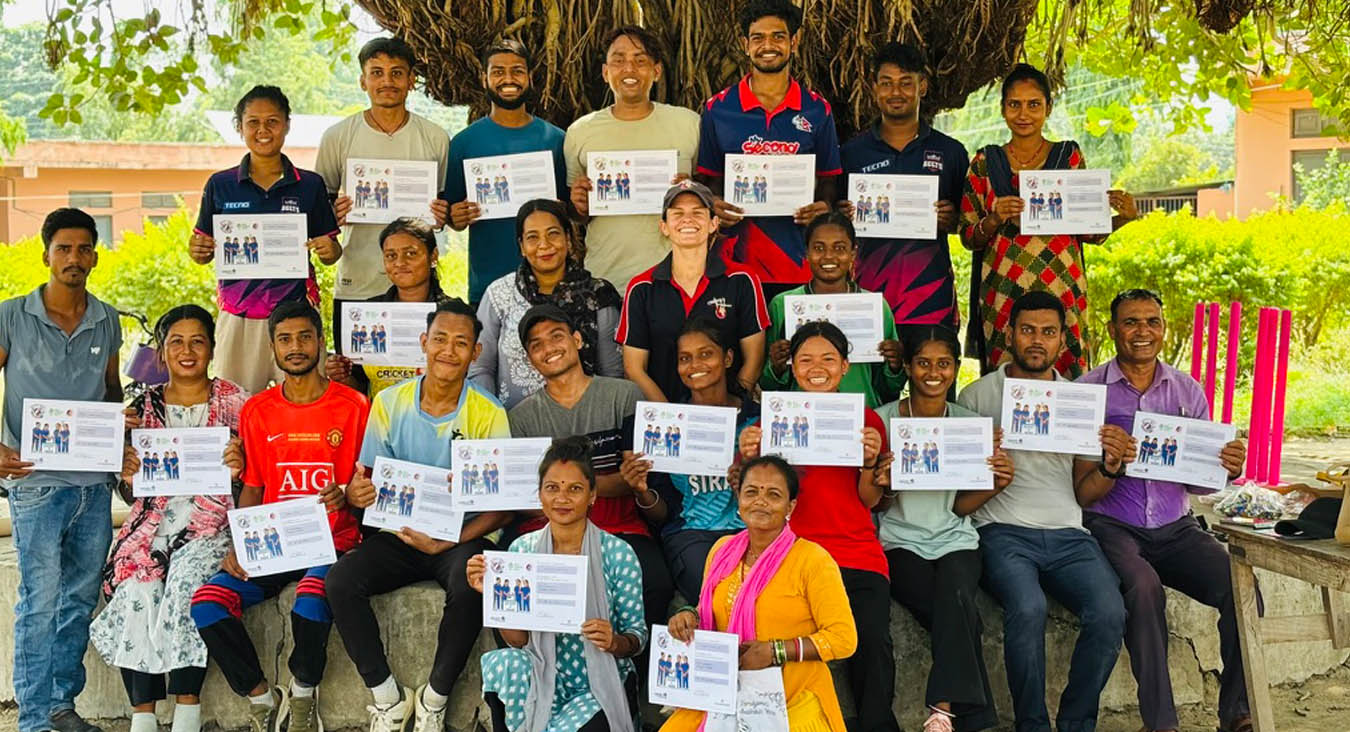
Cricket4WASH: Turning Play into Healthier Lives
Cricket4WASH was created to answer a simple but powerful question: can cricket help young people turn WASH knowledge into everyday healthy behaviour? In Karjanha Municipality, Nepal, this idea was tested through a new Cricket + WASH Playbook.
The playbook was co-designed to bring together cricket, health education and youth leadership. WHH identified the key WASH messages that young people need most. CWB transformed those messages into cricket-based games, activities and flashcards that make learning active, fun and memorable. Sabal Nepal then piloted the activities with 90 students across three schools, gathering feedback from students and teachers to refine and improve the final playbook.
To ensure quality delivery, coaches, teachers and youth leaders participated in a two-day “ICC Foundation Level + WASH” course, building both cricket coaching skills and confidence to lead WASH discussions. Once trained, these coaches led the implementation, delivering the six-session Cricket + WASH programme over a period of 42 days in grades 8–10.
From knowledge gaps to full understanding
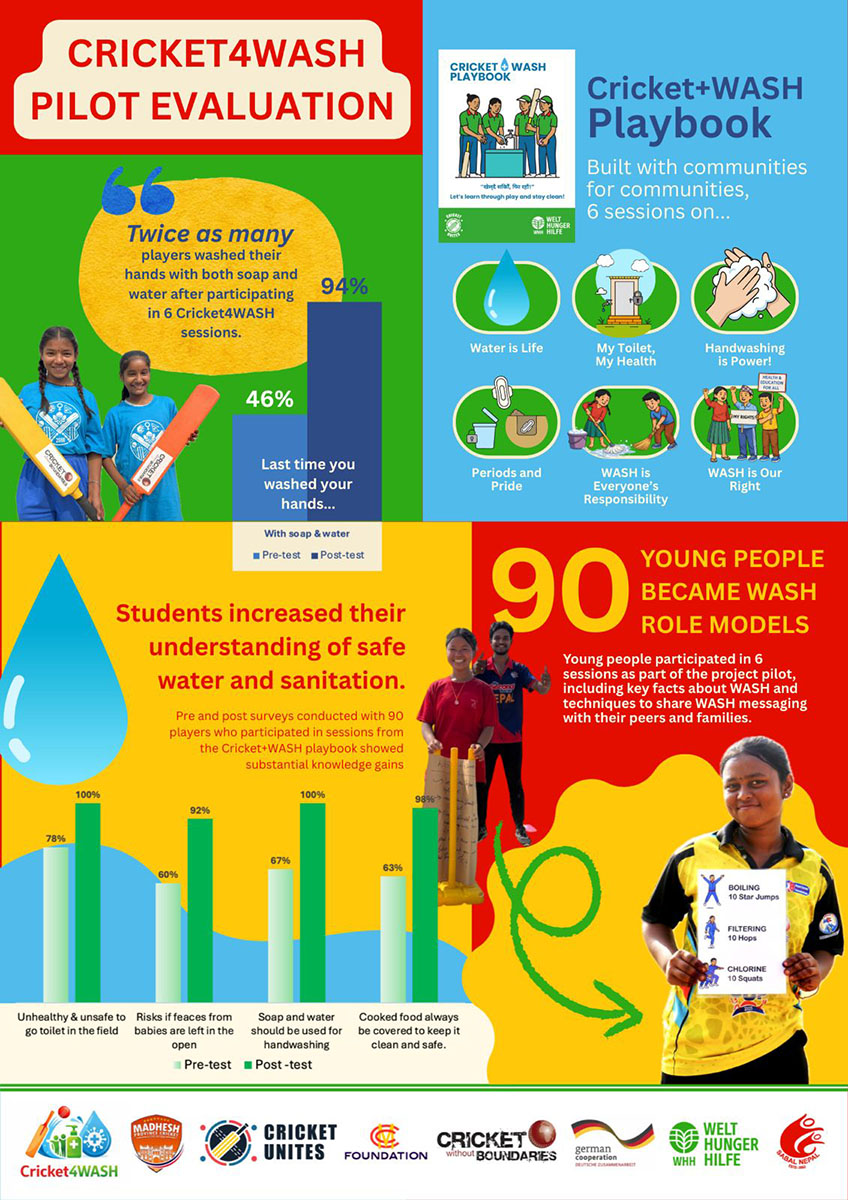
Before the programme, many students had only partial understanding of key hygiene and sanitation issues. After just six cricket-based sessions, knowledge improved sharply across all areas, for example:
- Understanding that open defecation is unsafe rose from 78% to 100% of students.
- Awareness that leaving babies’ faeces in the open is dangerous increased from 60% to 92%.
- Knowledge that handwashing should use soap and water rose from 67% to 100%
Harmful beliefs were replaced with healthy ones
The programme also challenged deep-rooted misconceptions. Before Cricket4WASH:
- 67% believed clean water is always safe to drink
- 53% did not think untreated water causes illness
- 41% believed keeping toilets clean was only women’s or cleaners’ responsibility
After the programme, all of these fell to 0%. Students now understood that water must be checked, unsafe water causes disease, and everyone shares responsibility for clean toilets.
Handwashing habits changed in practice
The programme also transformed how students washed their hands. Before the sessions, many relied on water only or wiping on cloths. After six weeks of cricket-based learning, washing with soap and water became the dominant behaviour, which is one of the most effective ways to prevent illness.
Why cricket made the difference
The Cricket+WASH playbook works because it does not separate learning from life. Students practised and discussed hygiene through games, teamwork and role-modelling. Each of the six sessions linked cricket to a key theme: water safety, toilets, handwashing, menstrual hygiene, shared responsibility and rights. By training coaches and teachers to deliver both cricket and WASH, the programme ensured that learning was trusted, consistent and youth-friendly. By embedding WASH into sport, it made healthy behaviour social, visible and normal.